Month-by-Month Pregnancy & Postpartum Guide
1 Month Pregnant
Weeks 1–4 - First Trimester
Welcome to the start of your pregnancy journey!
Even though you may not feel any different yet, your pregnancy journey has officially begun. Pregnancy is dated from the first day of your last normal menstrual cycle, not the day you conceive. That means by the time you’ve missed your period, you’re already around four weeks pregnant!
The first month of pregnancy is often quiet. You might not even know you’re pregnant yet, and that’s completely normal. Still, there’s a lot happening quietly behind the scenes as your body gets ready for the journey ahead.
What’s Your Body Doing at 1 Month Pregnant?

During the first month, a lot of incredible things are happening at the tiniest level:
-
Ovulation: An egg is released from your ovary and travels through your fallopian tube.
-
Fertilization: If sperm meets the egg, they join to form a fertilized egg and shortly after becomes an embryo—a small cluster of rapidly dividing cells.
-
Implantation: A few days later, the embryo attaches itself to the lining of your uterus, officially beginning pregnancy.
-
Missed period: This might be the first sign of pregnancy!
-
Rising pregnancy hormones: Your hormone levels are already changing. You are starting to produce more of the hormone progesterone and the hormone human chorionic gonadotropin (hCG) which will rise rapidly in early pregnancy. Fun fact! Pregnancy tests measure hCG levels to confirm a pregnancy.
What’s your due date?
If you know the date of your last menstrual period, you can calculate your estimated due date, even in the first month of pregnancy! On average, most pregnancies last 40 weeks, or 280 days. To calculate your estimated due date, count 280 days from the first day of your last menstrual period.
How You Might be Feeling at 1 Month Pregnant
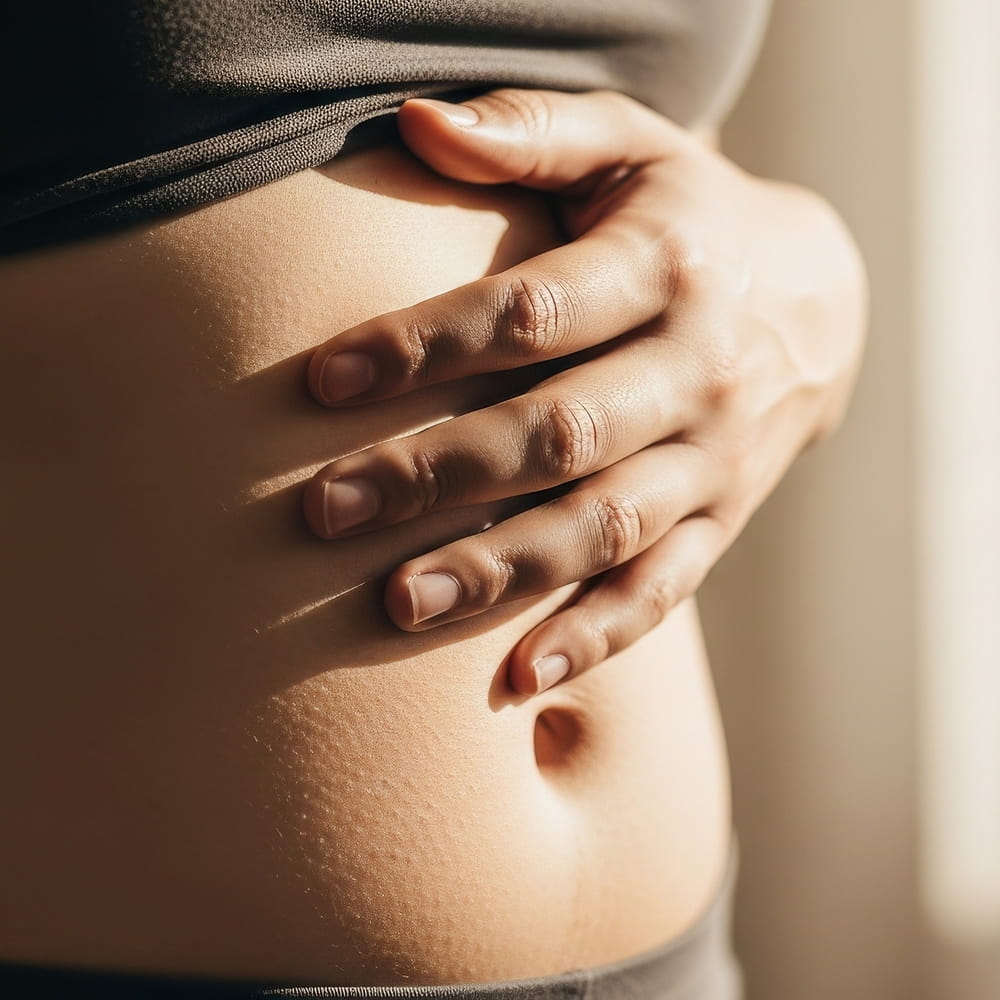
The first few weeks can bring a mix of emotions—excitement, uncertainty, maybe even disbelief. Physically, some people may experience implantation bleeding, mild cramping, fatigue, sore breasts, or mood swings. It’s also completely normal to have no symptoms at all in this early stage. Some physical symptoms of pregnancy you might experience in month 1 are:
-
Fatigue (thanks to a rise in levels of the hormone progesterone)
-
Swollen or tender breasts
-
Light spotting or mild cramping from implantation
-
Mood swings or increased sensitivity
-
Or, maybe... nothing noticeable yet!
Early pregnancy symptoms might be minimal but remember, every pregnancy looks different. Whether you feel every symptom in the book or none at all, your body is doing exactly what it needs to do.
Things to Do in Month 1 of Pregnancy
1. Take a pregnancy test
- If you’ve missed your period, an at-home pregnancy test can usually detect pregnancy as early as four weeks, with up to 99% accuracy.
2. Schedule your first appointment
- If you were planning for pregnancy, you may have already had a preconception visit with your OB/GYN or midwife.
- If not, now’s the time to confirm your pregnancy and schedule your first prenatal appointment. This usually happens between 8-10 weeks of pregnancy.
3. Focus on good nutrition
- Begin (or continue) taking a prenatal vitamin containing folic acid.
- Eat folate-rich foods like leafy greens, beans, lentils, and citrus fruits.
- Avoid alcohol, raw fish, and unpasteurized foods to protect your developing baby.
- Stay hydrated! Water helps your body adjust to pregnancy changes.
We created a handy, downloadable checklist that includes the key things to do or think about this month. Simply download, save it on your phone, and bring it up whenever you need a reminder!
Wrap-Up

The first month of pregnancy can feel like a mix of excitement and uncertainty, especially if you’re still waiting for that first appointment.
Focus on rest, good nutrition, and small steps toward caring for yourself. You’ve got plenty of time to prepare—this is just the beginning of a beautiful journey!
FAQs
How many weeks is one month pregnant?
1 month pregnant is 1-4 weeks of pregnancy, part of the 1st trimester.
Are there any foods or activities I should avoid at 1 month pregnant?
Your healthcare provider will share a list of things to avoid during pregnancy, but avoid smoking, alcohol, unpasteurized foods, raw fish, deli meats, fish high in mercury, and try to limit caffeine intake. Remember to talk to your healthcare provider before taking certain medicines (even over-the-counter options) and continuing with certain skincare products. You can maintain your regular exercise routine!
When can I take a pregnancy test? How accurate are pregnancy tests at 1 month?
Some pregnancy tests can detect a pregnancy as early as 4 weeks and with up to 99% accuracy.
When should I schedule my first prenatal appointment if I'm 1 month pregnant?
Your first prenatal appointment will usually happen around week 8. At this appointment, your healthcare provider will confirm your pregnancy and can calculate an estimated due date!
How much weight should I gain in the first month of pregnancy?
Pregnancy weight gain will look different for everyone! Usually you won’t see any weight gain in the first month or even the first trimester. On average, you will only need to gain about 1–4 pounds in the first few months of pregnancy.
Helpful Resources

How Soon Can I Take a Pregnancy Test Blog
Tips for when to take a pregnancy test and what to do to ensure the most accurate results.

Nutrition During Pregnancy Care Guide
Everything from what and how much you should eat to important nutrients to include during pregnancy.

Breastfeeding While Pregnant Care Guide
Still nursing but just found out you're pregnant with your next baby? This care guide can help.
Qualify for Motherhood Essentials through Insurance
You can qualify for a breast pump at any time during pregnancy and up to one-year postpartum. See if you qualify for a pump, pregnancy & breastfeeding classes, milk storage bags and more through your insurance or log in to check on your account details.