
Breastfeeding Guide for the First 3 Weeks
Becoming a new mom is an exciting time, filled with new experiences and so much to learn! The first three weeks of breastfeeding can feel like a steep learning curve for both you and your new baby. But don’t worry—this guide is here to help you navigate these early weeks with confidence. You’ll find tips on what to expect and how to make this time as smooth and comfortable as possible. Take it one day at a time, and soon you’ll feel like an expert on your baby!
Early Milk and Colostrum
Your baby’s first milk, colostrum, is packed with essential nutrition and antibodies that support your baby’s immune system and overall health. Placing your newborn on your chest immediately after birth for skin-to-skin contact is highly recommended. This helps your baby stay warm, encourages early feeding instincts, and promotes bonding during these critical early weeks.
Even tiny amounts of colostrum are incredibly valuable in the first days. As your milk production increases, the amount of milk will grow from just teaspoons on the first day to ounces by the end of the first week.
Breastfeeding Your Baby: How Often
Newborn babies need to breastfeed at least 8–12 times per day. Most feedings will be spaced 1.5–3 hours apart, from the start of one feeding to the beginning of the next. If your breastfed baby is feeding well and is having plenty of wet and dirty diapers, it’s okay to let them go a bit longer between feedings—up to one 4–5 hour stretch per day. This can be your chance to rest and recharge!
The American Academy of Pediatrics recommends feeding on demand to support milk production and weight gain. This means being responsive to your baby's hunger cues and not trying to feed them on a rigid schedule. In the early weeks, it’s also best to wait until breastfeeding is well established—usually around 3–4 weeks—before introducing pacifiers or bottles. This usually gives mothers and babies enough time to master latching, feed effectively, and build a strong milk supply before adding any artificial nipples.
Strive for a Deep Latch
A deep latch is key to successful breastfeeding and preventing sore nipples. Make sure your baby’s mouth covers a good portion of the areola, not just the nipple.
- Try different breastfeeding positions to see what works best for you and your baby.
- If the latch is painful, gently break suction and try again—often the second or third attempt feels much better.
Offer Both Breasts at Each Feeding
Offering both breasts ensures your baby is getting enough breast milk and helps increase milk production. If your baby is sleepy and uninterested in the second side, try changing their diaper or giving a quick burp between breasts to help wake them up.
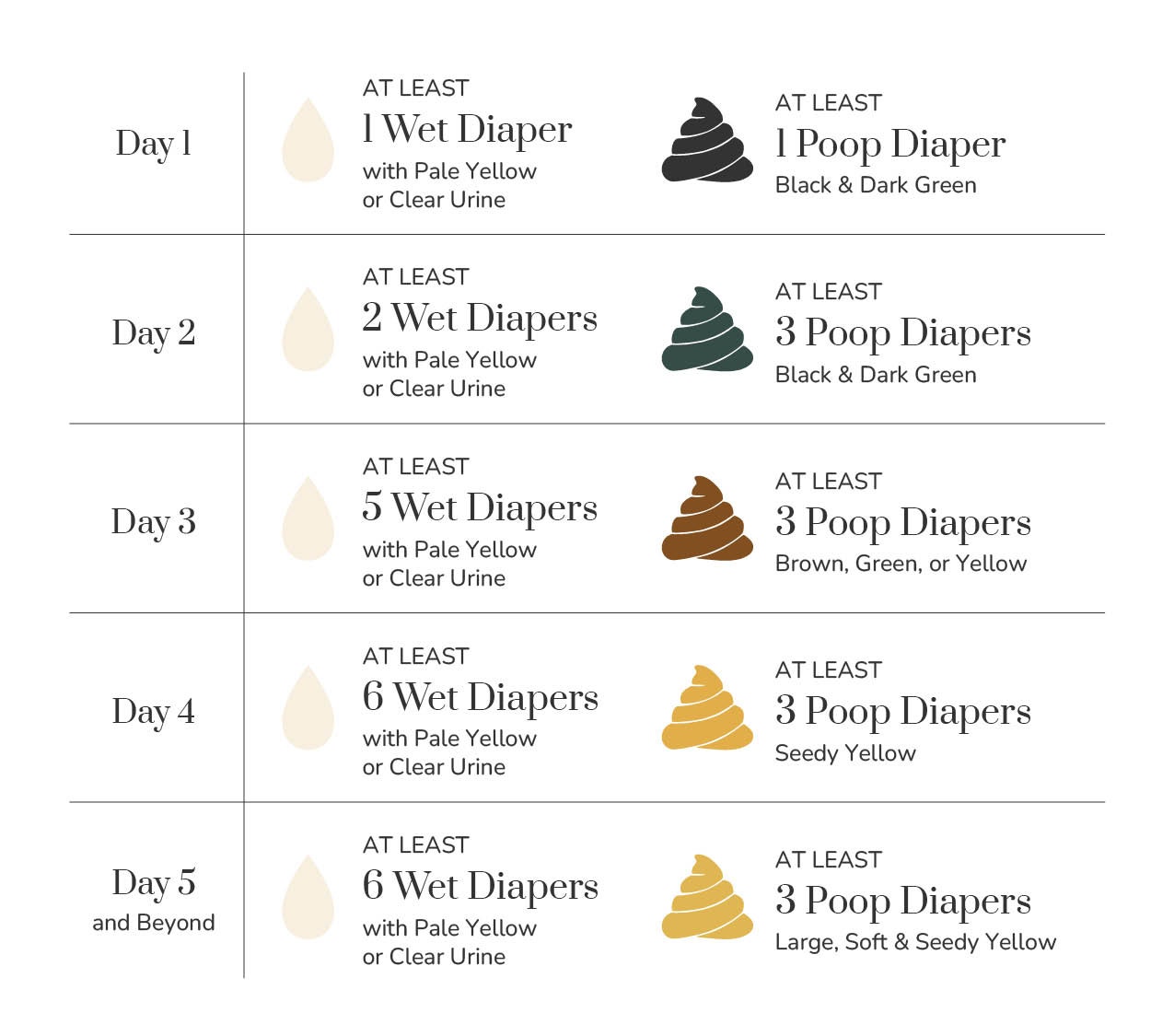
Diaper Output: What to Expect
Monitoring your baby’s diaper output for the first week or two can help ensure they’re getting plenty of milk. Here's a guide to what you should look for:
Baby Weight: Loss and Gain
It’s normal for newborn babies to lose up to 7% of their birth weight in the first few days. By Day 4, your baby should start gaining 20–40g (2/3–1 1/3 oz) per day and typically regains birth weight by Day 14. Regular visits with your baby's pediatrician or health care provider can offer reassurance that your baby’s weight gain is on track.
Engorgement Relief
During the first week—usually by Day 3—your breasts will begin to feel fuller and heavier as your milk production ramps up. This is normal and a good sign that milk supply is increasing, but severe breast engorgement can make it difficult for babies to latch and for milk to flow. Here are tips for relief:
- Frequent breastfeeding (8–12 times per day) is the most effective way to prevent severe engorgement.
- Cold packs between feedings can help reduce inflammation.
- Reverse pressure softening and gentle hand expression can soften breasts for a more comfortable latch.
- Over-the-counter anti-inflammatory pain relievers, if safe, can help reduce swelling and discomfort.
Take Care of Yourself
Caring for your baby is a full-time job, but your wellbeing matters too.
- Eat nourishing foods and drink plenty of water.
- Rest whenever you can. Even short naps can help!
- Accept help from family and friends for household chores or meals.
Remember, taking care of yourself isn’t selfish—it gives you the energy, patience, and confidence to care for your baby, making these early weeks more manageable and meaningful for both of you.
Common Difficulties and Ongoing Support
If you experience sore nipples, difficulty latching, or worry that your baby isn’t getting enough breast milk, don’t wait to get help.
- Hand expression and pumping after feedings can ensure your baby is getting enough milk while stimulating production.
- A lactation consultant can help troubleshoot common difficulties and create a personalized feeding plan.
Remember, the first few weeks are all about learning, adjusting, and finding what works best for you and your baby. With patience, support, and good self-care, you’ll grow confident in your breastfeeding journey together.
Need Extra Support on Your Journey?
You may be eligible for live pregnancy and breastfeeding classes taught by lactation consultants, plus a breast pump and more through insurance. Fill out our eligibility form to see what your plan covers!
Disclaimer: Our classes and accompanying materials are intended for general education purposes and should not replace medical advice. For personalized recommendations, please consult your healthcare provider and/or lactation consultant.
Share


More Pregnancy Care Guides
Pregnancy After Loss: Preparation and Support
Elastic Nipples
Breastfeeding Infants With Muscle Weakness
Freeze-Dried Breast Milk
High Lipase Milk